Many ecommerce brands obsess over ads and traffic, then overlook the final few clicks that actually generate revenue. The checkout flow and payment experience are where sales are won or lost. Nautilus Marketing has seen well‑designed payment journeys lift conversions dramatically, simply by making it easier and more reassuring for customers to complete an order.
Why Checkout Experience Matters More
In practice, checkout is not just a form; it is a trust test. Layout, loading speed, payment options, and even the microcopy around buttons all signal whether a store feels credible. Nautilus specialists regularly find that reducing the number of fields, clarifying shipping costs early, and offering recognisable payment brands increases completion rates without changing the offer itself.
Behaviour also varies by community. Some audiences are entirely comfortable with newer assets and tokenised ecosystems and may even prefer crypto to place their wagers on entertainment or prediction platforms. Others want familiar cards, instalment options, or local bank transfers. Brands that map these preferences and show relevant options at the right time usually see higher average order values and more repeat purchases.
Understanding Global Payment Habits and Expectations
For international stores, payment expectations shift from country to country. The Nautilus team often starts with analytics and market research to answer a few key questions. Which devices dominate, mobile or desktop? Which currencies are essential? How many customers abandon at the payment step compared to shipping or cart review? This data shapes which payment methods to prioritise and how to present them.
Local familiarity matters as much as functionality. In some regions, wallets are seen as modern and convenient. Elsewhere, customers gravitate toward bank‑backed methods or cash‑like vouchers. Translating payment labels into the local language, showing prices in the right currency by default, and explaining fees or conversions clearly can all lower hesitation at the crucial moment.
Turning Smooth Payments Into Conversions
From a marketing perspective, payments should be treated as part of the value proposition, not just a technical bolt‑on. Nautilus consultants frequently integrate messaging about easy checkout, flexible payment plans, and trusted providers into landing pages, remarketing ads, and email flows. When customers know what to expect before they reach the cart, they are less likely to stall or bounce.
Small tweaks compound over time. Adding guest checkout for first‑time buyers, saving preferred methods securely for logged‑in customers, and testing shorter versus longer forms all contribute to a smoother flow. Combined with clear reassurance about encryption and privacy, this builds confidence that aligns perfectly with strong branding and smart acquisition campaigns. Brands that treat payment experience as a central marketing lever, rather than an afterthought, tend to build more loyal, higher‑value audiences who return because the entire journey simply feels easier.
As we drift toward 2026, the digital marketing horizon stretches out, vast and shifting. New technologies are quietly reshaping the way businesses breathe life into their brands, and the pulse of consumer behaviour grows harder to anticipate. Yet, in this dance between the familiar and the unknown, those who can adapt will stand tall. This piece isn’t just about predictions; it’s a glimpse into the heartbeat of the future of digital marketing in 2026.
The Rise of AI and Machine Learning in Digital Marketing
There’s a hum in the background, a faint buzz. Artificial Intelligence (AI) and machine learning are no longer novel ideas but powerful tools that have started to shape the very essence of digital marketing. By 2026, their fingerprints will be on every part of the marketing process, from mundane tasks to the intimate act of understanding a customer’s needs before they even speak.
Picture this: personalised marketing, no longer driven by broad assumptions, but by precise, data-driven insights. AI will study behaviours, trace patterns, and whisper recommendations tailored for each individual. Marketers, once burdened by endless data, will find solace in automation, leaning on AI to handle the segmentation of their audience, the timing of their messages, and even predicting what will resonate most.
In this new world:
AI will sculpt hyper-personalised experiences, moulding ads and emails to speak directly to the needs and desires of each user.
Chatbots, more than just faceless digital assistants, will evolve, handling complex queries, offering real-time solutions, and even suggesting products with unsettling accuracy.
Programmatic advertising will feel almost like intuition—AI knowing exactly when and where to place your ad to reach that one person who was meant to see it.
As automation rises, freeing marketers from the grind of repetition, creativity will bloom. And in this space, the *future of digital marketing* will unfold, a testament to the quiet, unseen hand of AI.
Data Privacy and the Shift Toward First-Party Data
A growing murmur from the crowd: privacy. By 2026, third-party cookies will crumble into dust, leaving marketers grasping for something real, something authentic—first-party data. The world is moving towards a more guarded sense of self, and consumers, once freely handing over their data, are tightening their grasp.
So, how does one navigate this guarded world? By building something real. Marketers will need to offer value—true value—if they want to see behind the curtain. Experiences and content must speak to the heart of the consumer, inviting them to willingly share pieces of their story.
The answer lies in:
Nurturing relationships that aren’t just transactional. The stronger the bond, the more willing people will be to share.
Investing in Customer Data Platforms (CDPs) that can harness the scattered shards of first-party data and weave them into meaningful insights.
Practising transparency. Trust isn’t built in a day, but clear communication about how data is used can be a solid first step.
The digital marketing future will be built on trust—where ethical data use isn’t just a requirement but a promise.
Omnichannel Marketing: A Unified Customer Experience
The world is noisy, fragmented. But by 2026, brands will need to offer something cohesive, something whole, omnichannel marketing will not be an option, but a necessity. The expectation will be seamlessness, a smooth journey across platforms where consumers glide from social media to websites to email without ever feeling the bump of disconnection.
To truly thrive in this new landscape:
Brands will need to weave their customer data together, creating a unified tapestry that tells the complete story of a customer’s journey.
Every message, every interaction, across every platform, must harmonise. There’s no room for dissonance in 2026; whether through a mobile app or a physical store, the experience should sing the same song.
AI will step in again, orchestrating real-time engagement, ensuring the right message is whispered at just the right moment.
The days of siloed marketing are numbered. In their place, omnichannel *digital marketing* will rise, creating richer, more meaningful connections that linger long after the campaign ends.
The Impact of Voice Search and Smart Devices
A voice cuts through the silence. More and more, it’s a voice search, not a typed query, that’s making the first move. By 2026, smart devices will be the gatekeepers of online discovery, with voice searches growing in prominence. Marketers will have to adjust, bending their strategies to this conversational style of search.
In this space:
Keywords will shift. They’ll stretch into long, conversational phrases as users speak instead of type. Natural language will become a cornerstone of SEO.
Featured snippets will be golden tickets, offering a fast track to the top of search results and ensuring brands are found via voice searches.
And, as ever, local SEO will reign. So many voice searches are local in nature, tethered to a specific place, a specific need.
With this shift, digital marketing strategies must evolve, leaning into the voice of the consumer, quite literally.
The Evolution of Social Commerce
The line between social and shopping will blur beyond recognition by 2026. Social media platforms are no longer just spaces for conversation, they are marketplaces, vibrant, buzzing, alive. Social commerce will be as natural as scrolling through your feed.
The future of digital marketing will be found in:
Visually rich, shoppable posts, where with a single tap, a user can bring a product into their world.
Live shopping experiences, where influencers and brands come together to create real-time moments of connection and purchase.
The voices of consumers themselves. User-generated content will continue to be a powerful force, one that drives sales by showcasing real experiences with products.
The rise of social commerce is a testament to how fluid and immersive the digital marketing world has become.
Content Marketing in 2026: The Need for Authenticity
Consumers have grown tired of hollow content. By 2026, they will demand something more, authenticity, value, and honesty. Brands that echo this will thrive; those that don’t will fade away.
To survive, brands must:
Create interactive, engaging content that invites participation—quizzes, polls, videos that beckon the viewer to engage, not just watch.
Embrace storytelling. True, authentic narratives will resonate far more deeply than generic marketing jargon ever could.
Highlight purpose. Brands that showcase sustainability or social responsibility will find favor in a more conscientious world.
Content marketing will evolve beyond mere information. It will become a vessel for meaning, for values, for connection in the future of digital marketing 2026, where even AI-assisted writing will often be refined using humanize AI free approaches to preserve authenticity.
Video and Visual Search Dominate
The future is visual. By 2026, video content will be king, and visual search will no longer be a fringe technology but a mainstream tool. This shift will demand marketers create content that isn’t just seen, but felt. Video production services will become even more popular to help tell their brand stories.
Success will come through:
Short-form video, the kind that TikTok and Instagram have perfected—quick, engaging, and impactful.
Optimising for visual search, ensuring every image a brand puts out can be easily found through tools like Google Lens.
The digital marketing world of 2026 will belong to those who speak in images, in moving pictures, and who understand the power of being seen.
Influencer Marketing: Shifting Toward Micro and Nano-Influencers
The landscape of influencer marketing will continue to shift, pulling away from celebrity figures and toward something smaller, more intimate. Micro and nano-influencers, those with smaller followings but deeper connections, will become the driving force.
The shift will be driven by:
Authenticity. Micro-influencers speak directly to their niche audience, creating trust that larger influencers often lack.
Real connections, not just reach. Consumers will care more about the voice behind the recommendation than the number of followers.
In this new world, digital marketing will find power in the small, in the genuine, and in the authentic connections influencers foster.
The future of digital marketing in 2026 will be shaped by technology, driven by trust, and filled with authenticity. Those who can adapt, who can see beyond the surface, will find themselves not just surviving but thriving in this brave new world. The future is unwritten, but its outline is starting to form, and for those willing to step into it, the possibilities are endless.
Phone enquiries are some of your most valuable conversions in your marketing campaigns. Prospects who pick up the phone typically have higher purchase intent than those who simply browse your website. Yet without proper tracking, these crucial touchpoints remain invisible in your marketing analytics, creating a blind spot for campaign optimisation.
Advanced call tracking bridges this gap by connecting every inbound call to its source. You gain complete visibility into which campaigns, keywords, and content pieces drive phone conversations.
How advanced call tracking attributes calls to campaigns
Basic call tracking assigns a single phone number to monitor general call volumes. Advanced solutions go much further. By dynamically assigning unique numbers to different marketing sources, it allows precise attribution to specific campaigns and even individual visitor journeys.
Dynamic number insertion automatically replaces the phone number displayed on your website based on how each visitor arrived. Someone clicking through from a Google Ad sees a different number than someone arriving from a Facebook campaign or organic search. When they call, the system instantly attributes that enquiry to the exact source.
This granular tracking extends beyond just channel attribution. You can track performance down to individual keywords, ad groups, landing pages, and referring URLs.
Tracking multi-touch journeys before conversion
Most prospects don’t convert on their first visit. They research across multiple sessions, engaging with various touchpoints before making contact. Advanced call tracking captures this entire journey, showing every campaign interaction that influenced the decision to call.
When a prospect visits your site from an organic search result, returns later via a remarketing ad, and then finally calls after receiving your email newsletter, you need visibility into all three touchpoints. Multi-touch attribution reveals how different campaigns work together throughout the customer journey.
This complete view helps you understand which campaigns are generating enquiries at different stages of the funnel. You might find that social media campaigns rarely drive immediate calls but play a crucial role in initial awareness, while email campaigns excel at converting prospects who are already familiar with your business.
Integrating call data with your marketing platforms
The true power of advanced call tracking comes to light when you integrate call data directly into your existing marketing tools. Feed conversion data back into Google Ads, Google Analytics, Facebook Ads Manager, and your CRM to create a unified view of campaign performance.
When Google Ads receives data about which keywords generated qualified phone enquiries, its automated bidding algorithms can optimise toward these valuable conversions. Integration with your CRM enables Sales Matching, where phone enquiries are tracked through to closed revenue. This reveals not just which campaigns drive calls, but which campaigns drive calls that convert into actual sales.
Optimising campaigns based on call quality
Call volume alone tells only part of the story. Ten calls might provide less value than two calls from qualified prospects ready to purchase. Advanced call tracking includes features that assess call quality, allowing optimisation based on lead value rather than just enquiry volume.
Implement call outcomes that categorise each conversation: new lead, existing customer enquiry, recruitment call, wrong number, or supplier contact. Apply these categories either manually through your team’s assessment or automatically through Speech Analytics technology that analyses conversation content.
Once categorised, you can filter your reporting to focus exclusively on qualified leads. This highlights which campaigns attract your ideal prospects versus those that generate high call volumes from less relevant audiences.
Gaining insights from conversation content
Beyond attribution, advanced call tracking captures and analyses the conversations themselves. Speech Analytics automatically transcribes phone calls and identifies keywords, phrases, and topics discussed during each conversation.
This conversational intelligence reveals what prospects actually care about. Which features do they ask about most frequently? What objections do they raise? These insights then inform everything from ad copy to landing page content to sales training.
You can also use conversation data to build sophisticated audience segments. Create remarketing lists for prospects who discussed specific products, expressed urgency, or asked about pricing.
Connecting every phone enquiry to the campaign that generated it fundamentally changes how you measure marketing effectiveness. With advanced call tracking, you eliminate attribution blind spots, optimise based on complete conversion data, and prove ROI with confidence.
The art of building trust within a website has never been more critical. Today’s internet users are more careful than ever. Some have experienced fraud or data breaches before, and they’re on high alert for anything suspicious.
According to the Federal Trade Commission, consumers reported losing more than $10 billion to fraud in 2023. In other words, for websites, this means gaining user trust is not nice to have but rather a must.
Certain factors, such as secure SSL certificates and testimonials, can make or break a visitor’s decision in your favor. By incorporating these trust signals tactically into your website, you create a safer, more credible experience, reassuring visitors are in good hands. Read this article to learn how to build an authority website that not only attracts but also gains user confidence.
The Role of SEO for Authoritative Websites
Search engine optimisation (SEO) is a set of actions you need to take to bring your website to the top of search engine results. Search engines consider the quality and relevance of your content, security, UX, user engagement metrics, and optimized on-page elements when ranking websites. All these elements make your website worthy of high positions for relevant search queries.
When users look for any information, they usually rely on the websites placed on the first page of SERPs. This is why not only search engines but also users should consider your website as a trusted source of information.
Next, let’s discuss the key features you must pay attention to when building authority sites.
The Key Features that Make an Authority Website
Creating an authority site is about more than just eye-catching designs or headlines. Today’s users are wary, always scanning for signs that a website is credible and safe. The authority site business model includes:
High-quality backlinks from authority sites
High-value content
Topic clusters
SSL certificates & data protection
About us and testimonial pages
An authority site doesn’t just draw visitors in but also builds a foundation of trust that keeps them coming back.
High-Quality Backlinks from Authority Websites
Backlinks are like trust signals in search engines’ eyes, so having backlinks from reputable sites can elevate your website’s authority. First, analyze your competitors’ backlink profiles using the backlink checker by SE Ranking. Look at who’s linking to your competitors—news sites, industry blogs, high-ranking articles. This list serves as potential authority sites to target and insights into their link-building strategies to seek out similar opportunities or even find gaps they missed.
One effective tactic is the “Skyscraper” method: create content that outshines what’s already ranking well on key authority websites. Aim to cover the topic more comprehensively, add fresh data, or incorporate visuals that make the content stand out. Then, reach out to websites that link to similar content and encourage them to consider linking to your improved version.
Another method is broken link building. By identifying dead links on relevant authority sites, offer your own content as a replacement, providing value to the site owner while earning a backlink for yourself.
Try a guest posting strategy. Contribute high-quality, relevant articles to reputable blogs in your niche and earn valuable backlinks. This way, you can showcase your expertise and get extremely valuable backlinks to your site.
Don’t overlook brand mentions. If your brand is being mentioned but not linked, reach out to those sites and ask them to link back to reinforce your brand’s presence and build your authority without needing entirely new content.
Regularly monitor these backlinks and mentions to ensure your backlink profile stays robust and aligned with your strategy. By keeping up with effective link-building strategies, you’ll develop a strong backlink foundation that can continuously support your site’s visibility and authority.
High-Value Content
High-value content is the cornerstone of an authoritative website. One way to achieve this is by publishing comprehensive, user-focused guides that address real pain points and answer common questions. These guides should serve as go-to resources, offering in-depth information and practical solutions that keep users on your page and encourage them to share your content.
Research is critical. Look into your audience’s needs and tailor your content to address those concerns directly. If your content feels relevant and genuinely useful, it builds trust. Here are content types that can add value and authority to your site:
How-to guides. Offer step-by-step instructions to solve specific problems, making it easy for users to follow along and achieve results.
Tutorials. Provide detailed walkthroughs with screenshots or video support for clarity for complex tasks.
Case studies. Share real-world examples and insights, illustrating successful strategies or lessons learned.
Comparison posts. Break down the differences between similar products, tools, or methods to help users understand their options and make informed choices.
FAQs. Address common questions directly, providing quick and reliable answers that enhance user experience and boost your content’s visibility in search results.
Checklists. Provide actionable, easy-to-follow steps that users can refer to for specific tasks, ensuring they don’t miss any important details.
Interviews with experts. Feature insights from industry professionals or thought leaders to add credibility and provide unique perspectives.
Share unique insights, adding value beyond the basics users might find elsewhere. A single article should provide a well-rounded view, filled with actionable advice and specific details that answer all of your readers’ potential questions.
Finally, optimize each piece for search intent by strategically using keywords, structuring your content clearly, and adhering to on-page SEO best practices. This isn’t just about rankings—it’s about ensuring your content resonates with users, stands out among competitors, and positions your site as an authority.
Topic Clusters
Source: DemandJump
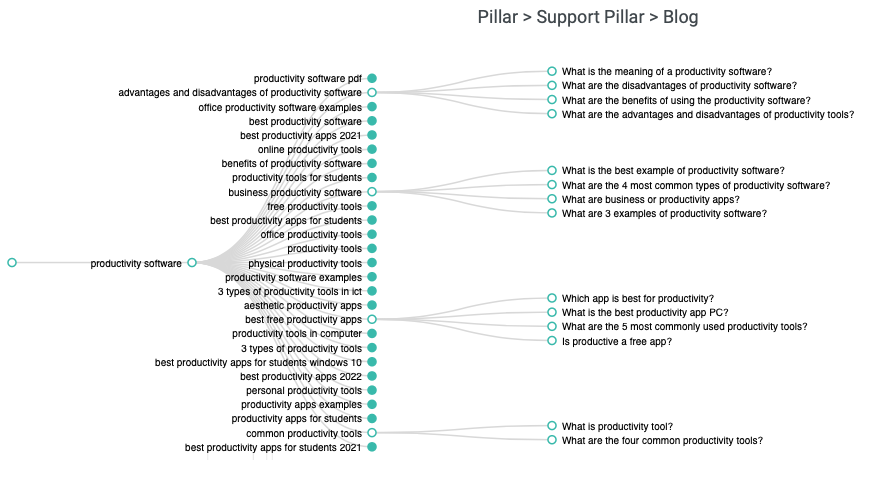
The topic cluster strategy is not about linking pages but creating a valuable resource for the target audience. At the center is the pillar page: a comprehensive guide on a broad subject that provides foundational understanding. The cluster content breaks the subtopics into attentive articles, building up layers on the core theme. For example, if it is a pillar page about “Digital Marketing,” cluster pages can cover particular areas like “SEO Basics,” “Content Marketing Strategies,” or “Social Media Marketing.”
The internal linking between the pillar and cluster pages will go a long way in helping with SEO and adding to the user experience. A structure of this kind notifies search engines that the information is arranged and detailed here, making it easier to rank for several keywords under one broad topic. Each link is a gateway to take users further into related subtopics, thus extending time spent on your authority site and reducing bounce rates.
Topic clusters let you optimize for broad and specific search intent. Pillar content captures users searching for information generally, while cluster articles target users with more specific questions. This aligns your content strategy with search behavior, which will better position you to rank for a range of queries. That would improve your site’s authority about the subject matter and create consistent organic traffic flow.
Topic clusters position your website as a resourceful, comprehensive source. Readers are most likely to revisit, bookmark, or even share your content when they come across well-organized, in-depth information. This boosts brand loyalty and trust and positions the authority site as an expert in its niche.
SSL Certificates & Data Protection
Source: Norton
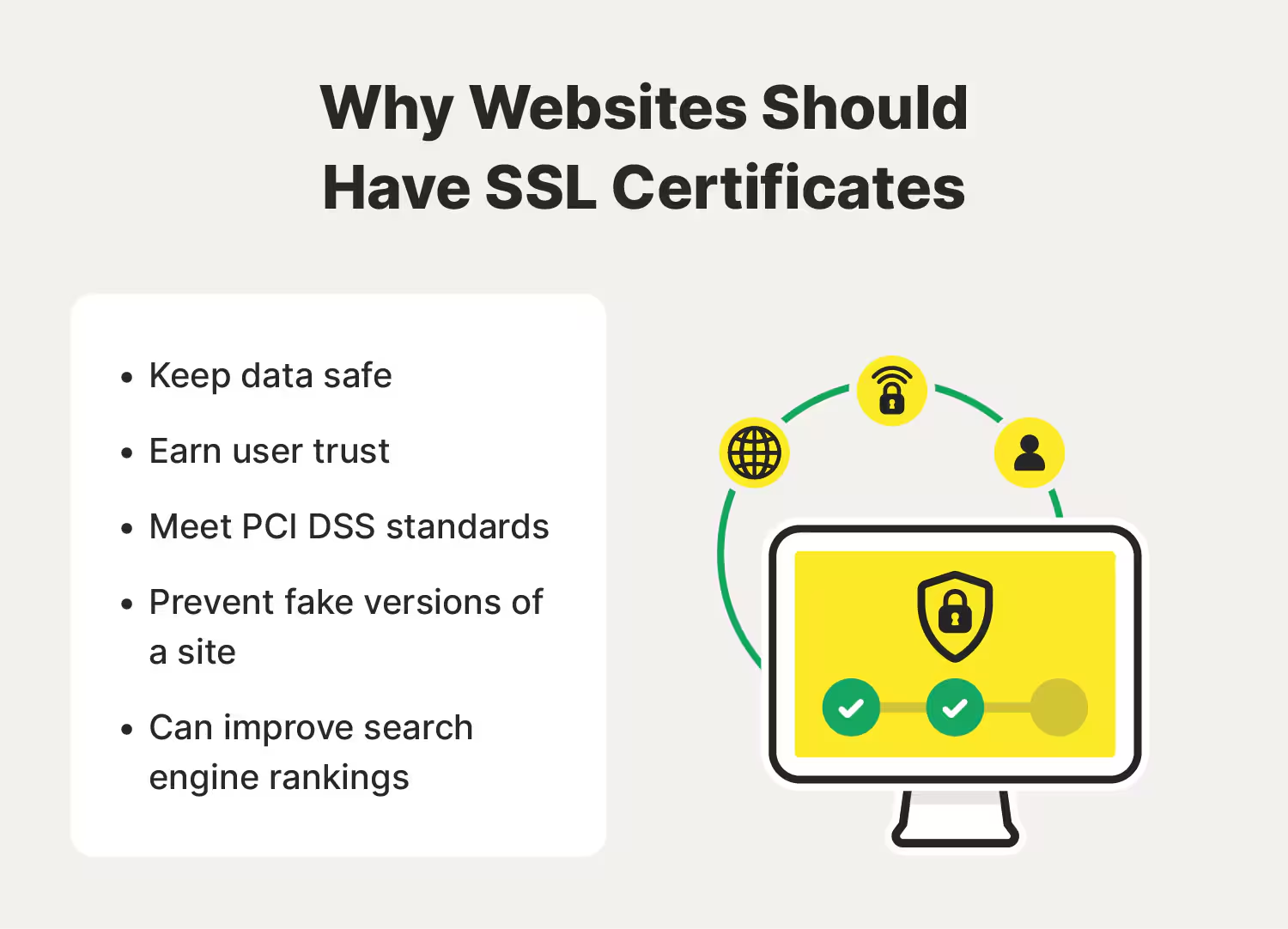
Secure Socket Layers (SSLs) are the backbone of creating a safe browsing experience. They protect clients from data breaches and allow information to remain confidential when exchanged. SSL certificates encrypt data so no third party can intercept sensitive information, such as passwords or payment details. When an authority site has SSL enabled, a padlock icon is shown in the browser bar to instantly tell users that their information is safe.
This security protocol does not only serve users but also impacts the credibility of your website and its SEO. Google has favored HTTPS-enabled authority websites, making the SSL certificate a minor yet significant ranking factor.
Sites without SSL might be labeled as “Not Secure,” where user trust will be affected, and such websites could face increased bounce rates. By implementing SSL, you provide notice to your users—and to search engines—that data protection falls within your scope of interest.
Beyond just technical security, SSL helps build a relationship based on trust. When users feel safe, they are more willing to engage with, share, and complete transactions on your site. As people become more concerned about data privacy, providing a secure environment shows that your business cares about user safety. This investment in security is not a technical step but a commitment toward creating a trustworthy digital experience.
About Us and Testimonial Pages
Source: True
The About Us page is more than just an intro but a space to create a narrative for your brand. This is how you can actually tell a tale of your brand’s mission, values, and the journey that brought it to life. Users want to know the people and the purpose behind a business. A well-crafted About Us page makes it easier for users to connect personally. When you share your story, you create authenticity, which will build user trust.
Testimonials and customer reviews are supportive and validating of your brand story. Prospects want to hear from real users who have benefited from your products or services, displaying proven success. They also offer social proof that may convince unsure users. After all, people tend to trust peer experiences more.
Consider highlighting testimonials to a diverse set of aspects related to your product or service, such as quality, customer service, and problem-solving. Adding video testimonials or case studies adds an extra layer of depth, putting a face and a voice to satisfied customers. The About Us page and testimonials reinforce the other.
Final Thoughts
Building an authority site isn’t about a series of discrete tactics. Instead, it’s about how you combine those tactics into one cohesive approach.
Strong topic modeling tells the search engines that your website is about comprehensive coverage of topics, while SSL certificates enable data security and help build trust with users. About Us and testimonial pages add the human touch, wherein there’s a reason for visitors to connect with your brand more deeply.
Google Ads Cost: A Comprehensive Guide to PPC Costs
Google Ads has become an indispensable tool for businesses looking to expand their online presence and reach potential customers. Pay-Per-Click (PPC) advertising is a powerful way to target your audience and drive traffic to your website. However, one of the most common questions business owners and marketers have is, “How much does Google Ads cost in 2026?” In this comprehensive guide, we will explore the factors that influence PPC cost and provide insights into the latest Google Ads cost trends for 2026.
Understanding the cost of Google Ads in 2026 requires diving deep into the intricacies of PPC. This comprehensive guide aims to provide clarity on PPC costs, allowing businesses to better structure their advertising strategies. Firstly, the costs differ widely influenced by factors such as competitiveness, timing, location, and overall goal. Google Ads, one of the leading online advertising platforms, oscillate in cost from pennies to several pounds per click.
The cost structure is essentially PPC – Pay Per Click. As the name suggests, you pay each time someone clicks on your ad. But understanding this correctly is crucial, given that Google uses an auction system to determine your ad placement, where the highest bid doesn’t always win. Instead, it’s a combination of the bid and quality of the ad—better impact, better position.
Remember, the average PPC cost in 2026 can vary significantly across industries and regions. The table below shows typical UK cost-per-click (CPC) averages by industry for 2026.
Industry / Sector
Average CPC
Typical Range
Legal services
£8.25
£4.50–£15.00
Insurance & finance
£5.50
£3.00–£10.00
B2B SaaS
£3.65
£2.00–£6.00
Home services
£3.20
£1.50–£5.50
Healthcare & dental
£2.80
£1.50–£5.00
Education & training
£2.40
£1.00–£4.50
Recruitment
£2.10
£1.00–£4.00
Travel & hospitality
£1.60
£0.80–£3.50
Retail & eCommerce
£0.95
£0.40–£2.00
Charity & non-profit
£0.85
£0.30–£1.50
Typical UK Search CPCs for 2026. Your actual cost depends on Quality Score, competition, match type and location.
Managing your Google Ads cost effectively necessitates recognizing these variations and adjusting your strategy accordingly. It is vital not to overlook the costs and the overall cost-performance rate when planning your Google Ad campaigns.
The right approach to PPC management can make your Google Ads more effective, cut extraneous costs, and increase return on investment. So, decoding the nuances of Google Ads and understanding the dynamic PPC cost will put you on the pathway to success. To conclude, while the fluctuating rate may seem intimidating, equipped with the correct understanding, optimizing your ad strategies and managing the ensuing ad costs can be a manageable task.
Understanding Google Ads Cost
Google Ads is an auction-based advertising platform where advertisers bid on keywords relevant to their products or services. When a user enters a search query matching those keywords, Google displays ads from the highest bidders in a prominent position on the search results page. The cost of running Google Ads campaigns, also known as PPC cost, can vary significantly based on several factors.
As businesses worldwide increasingly turn to digital platforms for marketing, understanding the cost implications of these campaigns is vital for effective budgeting. An understanding of the Google ads cost therefore couldn’t be more important in 2026. Google Ads, as a top-tier online advertising platform, holds a significant place in many company’s advertising strategies. It’s therefore vital that businesses have a clear understanding of the cost, price, and the rate at which these costs can accumulate. The cost of Google Ads in 2026, compared to previous years, promises some interesting subtleties.
The Google Ads cost varies depending upon a range of factors. Several components make up the overall price you will pay for Google Ads. The fee associated with Google Ads depends largely on the type of ad you choose to run. In 2026, like any year, the price of Google Ads shows some variation. The rate of these costs fluctuates according to factors such as the type of ad, the location of the ad and the competition in the ad space. Therefore, the understanding of the Google Ads cost is vitally important in 2026.
Increases in ad costs for Google are expected as they follow trends in the general inflation rate. However, Google Ads is an investment, and returns can far surpass the original ad fee. Overall, the costs and rates associated with Google Ads in 2026 should be part of any business’s marketing strategy. Therefore, understanding Google Ads and their fee structure’s implications are key. If your business also relies on organic visibility, it’s worth weighing paid search alongside SEO and eCommerce strategy for the best overall return.
Factors Affecting PPC Cost
As an advertiser on Google Ads taking notes on Google Ads Costs, it’s crucial to identify the factors affecting your maximum CPC or cost-per-click. These factors could invariably influence your Google Ads costs, or ad costs, as well as how much you might opt to spend on your campaign. Understanding Google Ads and the costs involved is the first step to making an informed decision on your ad spend for 2026 and beyond.
Your maximum bid majorly influences the ad costs for Google Ads. This is the most you’re willing to spend for a click, and Google Ads uses your bid in conjunction with your Quality Score to determine your ad rank. This could immensely increase your costs or possibly decrease them. Determining your maximum bid is therefore an essential part of controlling your Google Ads cost.
Another impactful factor is your chosen keywords. Depending on their competitiveness and demand, they could increase your CPC. It’s also worth noting that the region and industry you’re targeting could affect your Google Ads costs as some areas and business sectors have higher competition, which could potentially increase your spend and CPC.
Finally, the success of your Google Ads campaigns and the costs involved will significantly depend on how well you manage your Google Ads. Regular monitoring and adjusting your bids, targeted keywords, and ad content can also help manage your costs effectively.
In conclusion, the factors affecting your Google Ads costs vary. Therefore, a comprehensive understanding of these factors is essential to manage your ad costs effectively and maximize your Google Ads performance in 2026.
Keywords: Choosing keywords is a fundamental factor influencing your PPC cost. Highly competitive keywords with a higher search volume often have a higher cost per click (CPC) because more advertisers are bidding on them. Long-tail keywords, which are more specific and have lower competition, can be a cost-effective alternative.
Ad Position: Your ad’s position on the search results page can impact PPC cost. Ads appearing in the top positions usually have a higher CPC, as they receive more clicks and generate more visibility. Achieving a top position typically requires a higher bid.
Quality Score: Google uses a Quality Score to determine the relevance and quality of your ads and landing pages. A higher Quality Score can lead to a lower CPC, making your advertising more cost-effective. Improving ad quality and relevance is crucial to reducing PPC cost.
Geographic Targeting: The location you target in your ad campaigns can affect the cost. Highly competitive markets and major cities tend to have higher CPCs compared to less competitive or smaller areas.
Ad Schedule: The time and days you choose to run your ads can impact cost. Bidding during peak hours or days can result in higher CPCs. Ad scheduling allows you to control when your ads are displayed to optimize your budget.
Competition in Your Industry: The competitiveness of your industry plays a significant role in determining your PPC costs. Highly competitive industries often have higher CPCs because numerous businesses are vying for the same audience.
Device Targeting: The choice of devices, such as mobile, desktop, or tablet, can influence PPC cost. Mobile users may have different behaviours and expectations, leading to variations in CPCs.
Google Ads Cost Trends & 2026 Forecast
To gain a better understanding of Google Ads cost in 2026, we can look at the trends and data available. It’s important to note that these trends are subject to change as the digital advertising landscape evolves. To get the most accurate and up-to-date information on PPC cost, you can refer to the latest data from Google or consult with a PPC agency like Nautilus Marketing.
Increased Competition: As more businesses recognize the value of online advertising, competition for ad space on Google has intensified. This increase in competition can lead to higher CPCs, especially for popular industries and keywords.
Evolving Ad Formats: Google is continuously introducing new ad formats and features, such as responsive search ads and video ads. These new options can impact cost, as advertisers adapt to the changing advertising landscape.
Machine Learning and Automation: Google’s machine learning algorithms have become more sophisticated in optimizing ad performance. While this can improve ROI, it may also affect PPC cost, as the algorithms adjust bids dynamically to maximize results.
Seasonal Variations: Some industries experience fluctuations in demand during specific times of the year. Advertisers should consider these seasonal trends and adjust their budgets accordingly to maintain cost-effectiveness.
Local and Mobile Emphasis: Google has been focusing on local search and mobile user experience. Advertisers targeting local audiences or optimizing for mobile may experience fluctuations in PPC cost based on these user trends.
Predicting the cost trends of Google Advertising in 2026 is paramount for both agencies and businesses. Based on current analysis and prediction, one can surmise that Google Ads costs will witness a significant uptick in 2026. The escalating competition in the realm of SEO, coupled with the constant fluctuations in marketing strategies, contribute heavily to this forecast. Understanding Google Ad costs requires meticulous analysis and the adept use of analytics. Google’s analytics tools provide an extensive overview of areas where you might need to concentrate your search engine marketing efforts. Considering the cost trends for Google Ads in coming years, it becomes increasingly vital to effectively manage your business’s Google AdWords costs to maximize ROI. While the Google Ads cost might seem daunting, it is essential to consider its potential for your business.
A well-managed, well-analyzed Google Ads campaign has the potential to be a worthy investment. Predictive analysis shows that many businesses will spend more on Google Ads due to its potential return on investment. However, managing and understanding the ad costs can become overwhelming. Hence, many businesses turn to agencies specializing in Google Ads. These agencies leverage analytics to craft tailored strategies, optimizing their client’s visibility in Google’s search listings, thereby ensuring a higher ROI. To summarize, the rising trend in Google Advertising costs will likely continue into 2026, as the value these ads bring to businesses outweighs the costs. With strategic campaign management and using Google’s analytics tools, companies can effectively navigate the dynamic landscape of Google Ads costs.
Maximizing ROI: Effectively Managing Your Daily Budget for Ads
Identifying the cost of Google Ads and their importance in a business’s advertising strategy can be a tricky endeavor. However, one effective solution is managing your daily budget for ads, a key strategy that directly influences the rate of success and quality of your Google ad services. By understanding the costs involved firsthand, you can better manage your spend and maximize the return on investment (ROI) your ads bring to your business. But just how do you do this? By making your Google ad spend work smarter, not harder.
Indeed, Google Ads cost isn’t simply about spend, but how that spend translates into quality leads. It sounds simple, yet, adequate Google Ads management requires careful planning and a keen eye for detail. It’s also about finding the harmony between what meets your budget and what drives results.
This management process is a continuous cycle. Once an ad strategy is put in place, it requires frequent revisiting and fine-tuning to maintain its effectiveness in a dynamic marketplace while ensuring it doesn’t exceed your daily budget. Remember, the cost of your Google Ads isn’t just about raw numbers; it’s about the value brought to your business. A well-managed Google Ads strategy can ensure your daily budget is efficiently used, costs stay within a manageable limit, and most importantly, your ads deliver maximum ROI.
Evidently, realizing quality returns from your Google Ads requires effective management and a clear vision of your business’s ad strategies. Without this solution, you may well find the costs spiraling, the quality of leads dropping, and the effectiveness of your ads diminishing. Always keep your eye on the goal: maximizing the ROI from every Google ad.
Navigating the world of Google advertising can be complex. Understanding the nuances and intricacies of Google Adwords is crucial to ensure the effective management of your business’s ad spend. Google Adwords is designed to provide businesses with a solution to enhance their visibility online. Therefore, it plays a significant role in the overall business strategy. By implementing effective strategies, you can potentially decrease your overall Adwords costs. Consider seeking professional services specializing in Google Adwords management to provide the best strategies in controlling your costs.
Focus on High-Value Keywords: Identify keywords that drive the most valuable traffic, even if they have a higher CPC. These keywords are more likely to lead to conversions and a positive ROI.
Remarketing: Implement a remarketing strategy to re-engage users who have previously visited your site. These users are more likely to convert, and remarketing can be a cost-effective way to bring them back.
Ad Group Structure: Organize your ad groups with a clear and logical structure. This helps you create highly relevant ad copy and landing pages for better Quality Scores.
A/B Testing: Continuously test different ad copy, ad extensions, and landing page variations to find the most effective combinations that drive conversions while maintaining cost-efficiency.
Long-Term Planning: Think beyond short-term gains. Building brand awareness and trust can lead to long-term customer relationships and cost savings in the future.
Is the Google Ads Cost Right for You? Understanding Ads Cost
Deciphering whether the cost of Google Ads is appropriate for your business can pose a challenging task. Understanding Google Ads cost in greater depth can assist in making a well-informed decision regarding your ad spend. The cost, intricately connected to factors such as maximum CPC (Cost Per Click) and the quality of ads, plays a pivotal role in determining the success of your Google Ads strategy. To know how much to spend on Google Ads, you must first comprehend the CPC bid, that is, the maximum amount that you are willing to pay for a click on your ad. A significant part of Google Ads cost involves managing the CPC bid and understanding the maximum bid that fits your budget.
As a general guide, the table below shows the monthly ad-spend tiers most UK businesses start with, and what each typically delivers.
Monthly Ad Spend
Best Suited To
What to Expect
£1,000–£2,000
Small & local businesses
A focused campaign on a handful of high-intent keywords; enough to test what converts.
£2,000–£5,000
Growing SMEs
Room to cover more keywords, add remarketing and optimise on real conversion data.
£5,000–£10,000+
Established & competitive sectors
Scale across Search, Shopping and Performance Max for meaningful lead volume.
The price of Google ads becomes more predictable when you truly understand how CPC interacts with your ad costs. The quality of your ads also influences your Google ads cost, with higher quality typically leading to lower costs and improved ad positions. Balancing the maximum CPC and striving for high-quality ads can often lower your ad costs. Each bid you make or max CPC you set for your Google ads, is directly proportional to your ad costs. In an attempt to control these ad costs, Google presents several bidding strategies designed to cater to distinct advertising goals and budget limitations. Therefore, comprehending your business’s unique needs can assist in selecting the best approach for your Google ads spend.
In conclusion, understanding these various factors central to Google Ads can be instrumental in maneuvering ad costs and ultimately optimizing your Google Ads strategy. Each component, from maximum bid and CPC bid to the quality of your ads, influences your Google ads cost to a considerable extent.
Tips for Managing Google Ads Costs
Keyword Research: Thoroughly research and select the right keywords for your campaigns. Consider a mix of broad, exact match, and long-tail keywords to balance costs and reach.
Quality Score Improvement: Invest time in improving your ad quality score. Make sure your landing pages are relevant, and your ad copy is engaging and specific to your keywords.
Geo-Targeting: If you’re targeting a specific location, use geotargeting settings to narrow down your audience. This can help you save on unnecessary clicks from users outside your target area.
Ad Scheduling: Analyse your ad performance by time and day and adjust your ad schedule accordingly. Focus your budget on the hours and days that generate the best results.
Ad Extensions: Utilize ad extensions to provide more information to users and encourage clicks. Sitelink and callout extensions, for example, can help enhance the visibility of your ads.
Conversion Tracking: Implement conversion tracking to measure the success of your campaigns. This allows you to allocate your budget to campaigns that are delivering the best results.
Budget Monitoring: Continuously monitor your budget and adjust it based on the performance of your campaigns. Don’t set it and forget it; be prepared to make changes as needed.
Working with Nautilus Marketing
Nautilus Marketing is a leading PPC agency that specializes in helping businesses navigate the intricate world of Google Ads. With our expertise, you can gain a competitive edge in 2026’s digital advertising landscape. Our services are designed to provide you with the latest data, industry-specific advice, and tailored strategies to ensure your Google Ads campaigns deliver a strong return on investment. The table below shows our transparent Google Ads management pricing.
Package
Price
Ideal For & What’s Included
Initial Setup
From £499*
Consultation, keyword & competitor research, ad copywriting, budgeting advice, ad account setup, conversion tracking and 1× landing page design & development.
Standard Management
£429 / month
For ad spend under £3,000/month: regular optimisations, monthly reporting & call, lead-quality checks and optional click-fraud protection.
Premium Management
15% of ad spend
For ad spend over £3,000/month: regular optimisations, monthly reporting & call, lead-quality checks and optional click-fraud protection.
To offer more in-depth insights into Google Ads cost in 2026, our team can also support your wider digital presence — from web development and social media to digital PR. Take a look at our portfolio to see the results we’ve delivered for clients.
Choosing The Right Digital Marketing Agency For You
When it comes to selecting the perfect digital marketing agency for your unique business needs, there are crucial steps to follow. Begin by clearly defining your project’s objectives, whether it’s a web redesign, branding overhaul, or something else. Ensure the agency has expertise in your industry and a track record of relevant work. Inquire about their creative process, project timelines, and pricing structure to align expectations. To truly assess if an agency is the right fit, a discovery call is indispensable. It’s a valuable opportunity to discuss your vision and objectives, allowing you to gauge if the agency aligns with your goals. If you’re on the lookout for a creative partner to bring your ideas to life, we invite you to book a discovery call with the nerds at Nautilus Marketing today. We’re enthusiastic about helping you elevate your brand and transform your vision into reality.
The cost of Google Ads in 2026 is a dynamic landscape influenced by numerous factors. PPC cost varies according to the industry, location, and the competitiveness of the keywords you target. Advertisers need to adapt their strategies to these changing conditions and continuously monitor their campaigns for cost-efficiency.
Clients come to us for all sorts of things: SEO, paid ads, web development, design content or any combination of them – but the real challenge is bigger than that.
We need to understand their competitive landscape:
What are their customers searching and how?
What is working for their competitors? Who is currently winning and who losing?
Where are the opportunities and which strategies are already saturated and table stakes?
This gives us the context for our plan… and is where Copilot researcher agent comes in.
It doesn’t replace strategic thinking and practical experience but it does let us gather, organise and synthesise information much faster freeing our team up to focus on its strengths, namely using our experience to scale their business and maximise their ROI.
How Research Has Changed
The research stage has always been a key part of marketing planning, but the way we do it has changed 100% as has the scale of it that we can carry out.
A detailed competitive review includes researching traditional search, paid ads and GEO as well as content gaps, website UX, trust signals and visibility beyond the web. For a full-service agency like ours, this matters a lot, because our research is the foundation everything we do.
Copilot has allowed us to scale our research and so develop campaigns more quickly and from a bigger base.
Learning To Use AI
AI tools come with a learning curve. Copilot is very approachable and so can fool you that you can skip the learning phase but knowing how to use it and knowing how to get the most out of it are completely different things. The 80:20 of Copilot is to focus on your skills not it’s settings.
Using clear constraints when writing prompts, asking for sources and assumptions to be explicit and verifying steps will lead to a step change in quality. When we moved across to Copilot we treated it as step change not a tweak or evolution. We tested several tools before setting on Copilot researcher, although clearly AI is evolving so quickly this might change.
Having done that we looked at team training and decided on an in-person training course with Acuity Training to upskill our team and combined ensure that everyone had the skills needed and was also using the same language to communicate about Copilot. We also made sure that we had a team Copilot specialist and made sure that they were in the office for the first few weeks to help out.
How We Use Copilot’s Researcher Agent
We use Copilot to help us process, synthesise and structure information – not replace the actual judgement needed to make sense of it all. When we use Researcher, we aren’t looking for a finished strategy. We are looking for a very wide initial view of a client’s competitive landscape, which it can produce so much quicker than manual research. We then use this to decide which areas to drill down into in more detail.
It helps us to pull a huge amount of raw data across multiple channels to build up an accurate picture of the competition. Our prompts ensure that Copilot is ‘marking its own homework’ as it goes but we will also often other AI’s to critique and double check this analysis before moving to the next step.
Why We’re Careful With It
AI-generated research comes in a neat package which can be very misleading. It is always polished and professional but can extrapolate inappropriately and is not good at pointing out uncertainties. This is especially important in niche and local markets where specific data and historic data can be poor or limited.
That’s why Researcher isn’t the whole process. Where recommendations are sensible, clearly well-reasoned and it provides relevant citations we will put them on a list for further work and review as we would work from a more junior member of our team. As ever the issue often comes down to where we can provide clients’ the biggest bang for their buck. Not all good ideas can be implemented in a world of limited time and resources.
Final Thoughts
Copilot’s Researcher function has become a key part of our process. In the early stages of a project we can get up to speed far more quickly for a client, it fits perfectly. We now gather and organise information faster, and build a much stronger starting point – all while giving our team more breathing room to focus on the work that creates real value.
It doesn’t replace strategy, specialist knowledge or experience, it makes them a bigger focus. The goal isn’t just to produce as much research as possible, but to produce better decisions from it.
 info@nautilusmarketing.co.uk
  020 4513 9344