info@nautilusmarketing.co.uk
  020 4513 9344





 8 minutes
 August 14, 2026
TikTok gets binned into the “nice to have” pile in more marketing meetings than any other platform. Usually by someone who watched a handful of dance trends years ago and wrote the whole thing off. Wrong call. 26.8 million UK adults were using TikTok by late 2025. A lot of them are exactly the customers a B2C business already spends money trying to reach somewhere else. TikTok marketing isn’t novelty territory any more. The real question is whether it works for this specific business.
Most TikTok business tips out there chase a single viral moment. Consistent reach, the kind that pays a wage, takes longer and looks far less exciting to write about.
Is TikTok Actually Worth It for Business?
TikTok marketing earns its place fast for anything visual, physical, or built around a specific personality. Home renovation. Fitness. Food. Beauty. Fashion. These audiences are already primed to be entertained. They’re also far more open to discovering a new brand mid-scroll than one just checking in on people they already follow.
B2B doesn’t get the same deal. Neither does anything legal, financial, or sold through a long committee-driven process. Nobody opens TikTok hoping to find a commercial insurance broker. Pretending otherwise wastes a client’s budget on views that were never going to convert. We’d rather send that spend to LinkedIn and say so upfront.
Three things separate the businesses that get real value here. Something worth looking at on screen. Someone prepared to be on camera regularly. The patience to keep posting for months before anything shows up in the numbers. Missing even one of those usually caps how far this goes.
Understanding the TikTok Algorithm in 2026
Instagram and Facebook still lean on who follows an account. TikTok mostly ignores that. We’ve watched a brand-new account’s third video outperform a competitor’s page that had been posting for two years and built up thousands of followers, purely because the algorithm tested it on a small group first and liked what it saw. Expansion from there has to be earned.
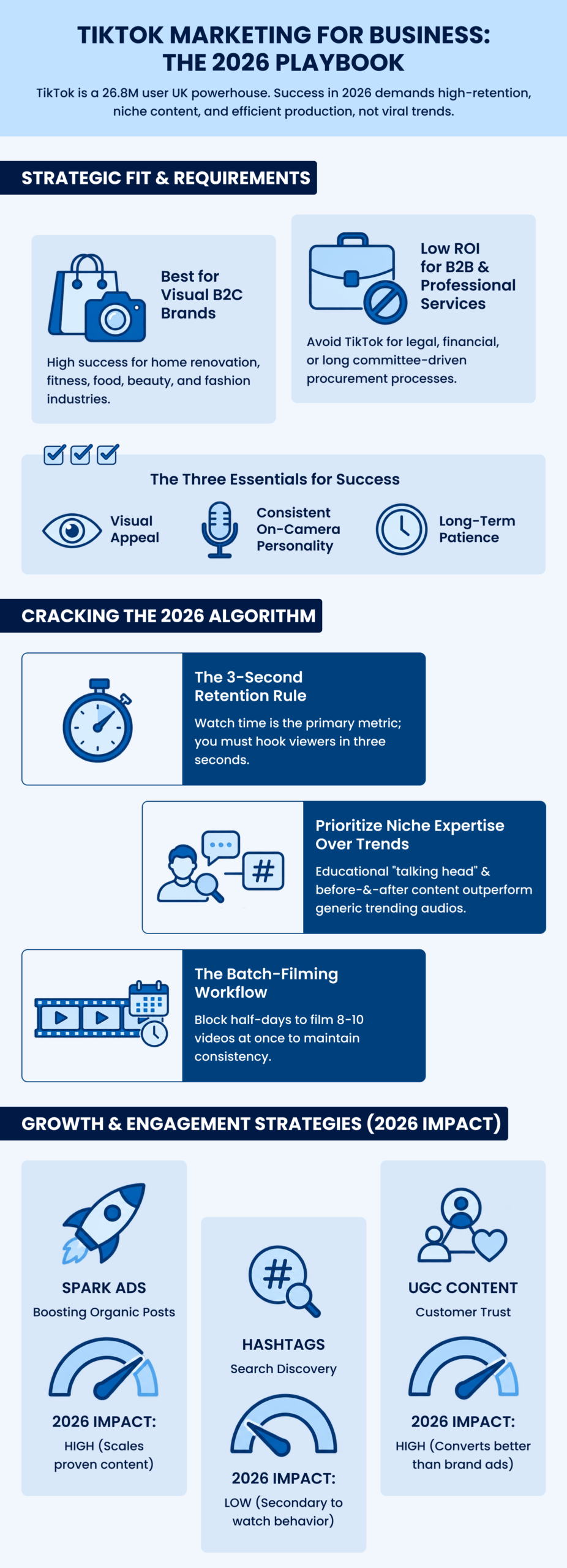
Watch time matters more than almost anything else here. A fifteen-second video watched right to the end beats a sixty-second video most people abandon after eight, regardless of which one racked up more total views. Shares and saves outweigh likes too, since sharing takes a small amount of real effort a like never asks for.
None of this rewards chasing followers. A TikTok marketing strategy built around follower count is solving the wrong problem entirely. What gets rewarded is the first three seconds of the video. Miss that window and the algorithm never gets the chance to notice anything else.
Content Formats That Perform on TikTok
It’s the difference between filming something painfully specific to what a business sells and spending an afternoon chasing a trending audio that has nothing to do with it. Most content calling itself a TikTok marketing guide still leads with the trend-chasing option regardless, grabbing whatever audio or dance is popular that week. It’s the weakest format for most businesses despite being the easiest one to try. High effort, low relevance, unless the trend has some real connection to what’s being sold.
A builder explaining why a certain foundation type fails in clay soil will beat a polished brand video most weeks. That’s the strength of talking-head content covering something specific and niche from inside the business: it costs almost nothing to make and performs consistently. Before-and-after content does especially well anywhere there’s a visible transformation. Renovations. Fitness. Skincare. A deep clean. POV-style videos, putting the viewer inside the moment rather than watching from outside, suit hospitality and retail particularly well.
Real customers filming their own experience with a product tend to convert better than anything a business produces about itself. It’s harder to source consistently. That’s exactly why most competitors still aren’t doing enough of it.
Building a TikTok Content Strategy
Posting once and hoping doesn’t work here any more than anywhere else. A workable TikTok marketing strategy needs three or four content pillars, themes the business can return to without running dry within a month.
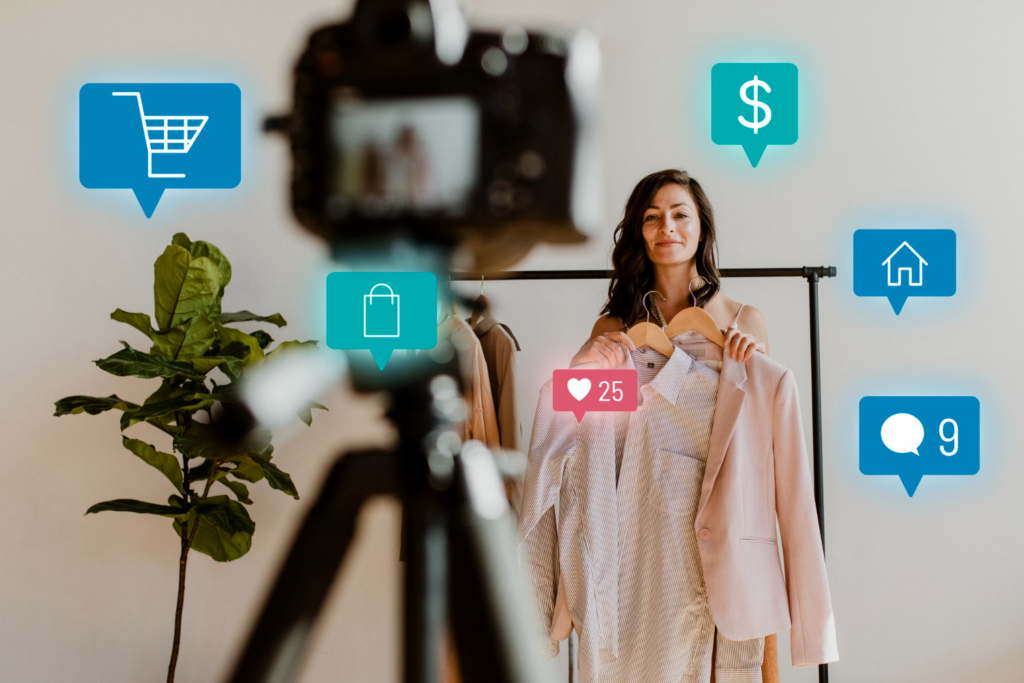
Batch filming is what saves most businesses from giving up on this platform. Block out half a day. Film eight to ten videos covering different pillars. Schedule them across the following fortnight instead of scrambling for something new every single day. That one change usually separates an account still posting after six months from one that quietly stopped after three weeks.
Consistency is what TikTok organic growth actually comes down to. Not any single viral moment. This slots into your overall social media strategy already running. It isn’t a replacement for it. The same footage usually feeds Instagram Reels and YouTube Shorts too, reshaped slightly for each. The batching part rarely shows up in a standard list of TikTok for business tips, and it’s usually the one thing that determines whether this lasts past month two.
Hashtag Strategy on TikTok
TikTok marketing doesn’t live or die on hashtags the way people still assume. Hashtags used to carry real weight. Not any more. Watch behaviour drives the For You Page now, and increasingly so does TikTok’s own search function. A lot of what still gets published as a TikTok marketing guide hasn’t caught up with that shift, and keeps treating hashtags as the main lever.
A couple of broad discovery tags alongside one or two specific ones, the kind someone would type directly into TikTok’s search bar, covers most of what hashtags are still good for. Fifteen generic tags stuffed under a caption does nothing measurable. It just reads as dated.
TikTok Organic vs TikTok Ads: What’s the Difference?
TikTok organic growth still rewards good content over an existing following. A brand new account with zero followers landing on the For You Page in its first week isn’t rare here, something that hasn’t happened on Facebook in years and rarely happens on Instagram either.
TikTok ads work best scaling something already proven organically. Cold creative, a produced advert nobody asked to see, performs worse almost every time. Spark Ads boost an existing organic post using its own engagement and comments. They consistently beat standalone ad creative built from nothing.
As a TikTok marketing agency, we test three or four organic videos with a client first. Ad spend then goes behind whichever one earns its engagement honestly, instead of guessing upfront which concept will land.
Industries That Win (and Lose) on TikTok
Restaurants prove better than almost anyone how well TikTok marketing works when entertainment and a buying decision sit right next to each other. A short video of food being plated, or a kitchen mid-service, does more for footfall than most paid campaigns manage on the same budget. Beauty and fashion aren’t far behind, helped along by a platform built around visual discovery.
Trades and home improvement do surprisingly well too, once the owner gets past the awkwardness of being on camera. B2B software, accountancy, legal services, anything sold through a long procurement process, sit at the other end entirely. There’s the occasional exception (a founder with genuine personality building an audience around industry commentary), but it’s rare enough that most B2B budget is still better spent on LinkedIn.
Repurposing TikTok Content Across Other Channels
We tell clients to film for TikTok first, mainly because the same vertical video usually gets reused on Instagram Reels and YouTube Shorts with barely any editing. Native TikTok content still tends to beat anything visibly recycled from elsewhere, watermark included, so it’s worth stripping that out before cross-posting.
Getting this repurposing workflow sorted, batching, editing and distributing across three platforms from one shoot, is exactly the kind of thing social media management services exist to handle once a business runs out of hours in the week.
Most agencies pitching a TikTok package talk about virality and stop there. Nothing on what happens once a video takes off. Turning one good video into a repeatable process is the part worth asking about before signing anything.
TikTok marketing works best treated as the cheapest, fastest testing ground a business has. It isn’t a separate project bolted onto everything else on social media. Whatever resonates there usually feeds straight back into the rest of the content plan.