info@nautilusmarketing.co.uk
 020 4513 9344


 4 minutes
 November 18, 2026

Marketers learn the four Ps and then spend most of their budget on promotion, while place, where a product actually meets its buyer, is the reason one online payment brand still sells across British shop counters in a tap-to-pay economy. A PaysafeCard is bought at a till in ASDA, WHSmith, One Stop or any PayPoint shop, paid for with cash or a card, and handed over as a receipt with a 16-digit code on it. The brand never fought the banks for screen space: it won counter space instead.
Place as the product
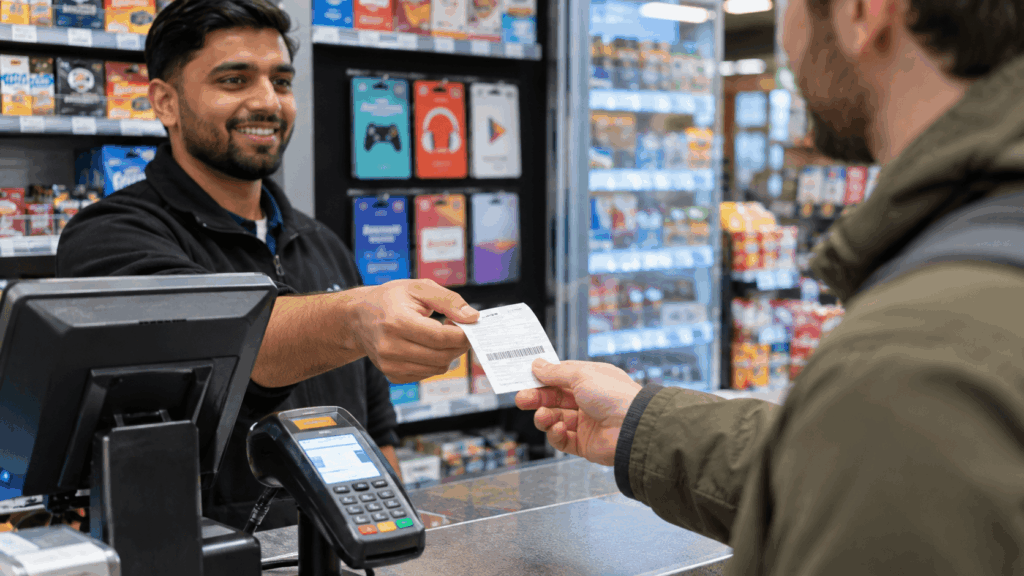
Most payment brands market an app and pay for installs. PaysafeCard sells a fixed-value voucher, in UK denominations of £10, £25, £40, £50, £75 and £100, through retail partners. The buyer does not need to download or register anything at the counter. The retailer earns from each sale, which turns every partner shop into a sales point and a piece of point-of-sale advertising at once, without the brand running a single store.
The fixed price points are a pricing decision as much as a product one. A shopper picks a number the way they would pick a gift card, so the spend is decided in the aisle rather than at an online checkout. That is a very different purchase moment from a card payment, and the brand’s channel strategy is built around owning it.
Where the balance gets spent
The code is only worth something where merchants accept it, so the brand’s real market is the list of websites at the other end. Games stores and app marketplaces sit near the top of that list.
Online casinos are another large outlet, for a reason that ties back to the till. An adult who buys a £25 code has fixed a budget before any site asks for money, and the operator never sees a bank card.
The fixed denominations create a quirk here. The smallest voucher is £10, so a few pounds are often left in the account after a payment. Some UK casinos take less than that. One breakdown of top-rated sites and their minimum deposits found five of the ten accepting £5 from an account balance, which turns the leftover into something usable.
An account on top of a voucher
Over time the brand added a layer that the original voucher did not need. A PaysafeCard account lets customers store several codes in a single balance and pay with an email and password instead of typing in each code.
The account changes the bargain. Without it, a single payment is capped at £40. With it, the limit rises to £1,000, but the customer hands over a name, date of birth and a verified phone number, and may be asked to confirm their identity. The brand now runs two products under one name: an anonymous code for the till and a registered account for regular users. Keeping both credible is a positioning job as much as a product one, and it is the kind of story brands often tell through digital PR rather than paid ads.
The costs the till does not show
The economics sit in the small print. According to PaysafeCard’s published UK fees and limits, a code that has not been fully used is charged £4 a month from the second month after purchase. An account with no transactions for 12 months pays £5 a month from the thirteenth month, and each refund costs £6.
None of this appears at the counter, where the message is simply cash in, code out. Shoppers who use a code within the week rarely meet these charges. Those who leave a balance sitting for months do.
Why the counter still matters
Card payments will keep growing, and the account layer shows the brand moving towards them. Its UK homepage still leads with paying online in cash, though, because the till is the edge. It reaches shoppers who prefer cash and people who would rather not put a card on a particular site.
For any brand weighing up where to sell, the story is about channels rather than payments. A product that lives on a shelf earns attention in a different way from one that lives in a sponsored shopping listing, and PaysafeCard has spent years proving that the older channel still works.